

Artemis Moon Base Construction Plan
Moon Base Timeline
The Artemis Moon Base timeline outlines NASA’s step by step plan to establish a permanent human presence on the Moon, beginning with early Artemis missions and progressing through lunar landings, infrastructure deployment, and long term surface habitation. Covering key milestones from 2026 to 2036, this timeline explains how NASA and its commercial partners will transition from orbital test flights to building a sustainable lunar base at the Moon’s south pole. It highlights mission sequencing, technology development, and the gradual expansion of human activity on the lunar surface as part of NASA’s broader Moon to Mars exploration strategy.
/ Star & Planets / Star Systems Within 0 to 20 Light Years / Sol Star System / Earth System > Earth Moon System Facts > Artemis Moon Base Timeline
Artemis Moon Base Timeline
The Artemis Moon Base Timeline began with the launch of the Artemis 1 Lunar Flyby. Each Artemis mission will build off the previous mission, and eventually we will begin building, and operating the Artemis Moon Base on the South Pole of the Moon.
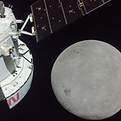
Artemis 1
Nov 2022
Artemis 1 was an uncrewed test mission by NASA that launched in November 2022 to begin the Artemis program. The mission sent the Orion spacecraft around the Moon to test its systems, safety, and performance in deep space around the Moon. After traveling over 1.4 million miles, the Orion spacecraft successfully returned to Earth, paving the way for future crewed missions to the Moon.

Artemis 2
Apr 2026
Artemis 2 was the first crewed mission of Artemis program in April 2026, led by NASA. It successfully sent four astronauts aboard the Orion spacecraft on a journey around the Moon to test life support systems and deep space operations with humans onboard. This mission paved the way for future lunar landings by demonstrating that crewed travel beyond low Earth orbit can be done safely.

Artemis 3
Late 2027
Artemis 3 mission in the Artemis program will focus on testing critical docking operations in Earth orbit. Astronauts aboard the Orion spacecraft will rendezvous and dock with one or both commercial lunar landers, SpaceX Starship HLS and Blue Moon lander, to validate systems needed for future landings. This mission will demonstrate that Orion can safely connect with these landers in space.

Artemis 4
Early 2028
The revised Artemis 4 mission in the Artemis program removes reliance on the Lunar Gateway and instead focuses on a direct lunar landing approach. Astronauts launched by NASA aboard the Orion spacecraft will rendezvous in lunar orbit in early 2028 with a commercial Human Landing System such as SpaceX Starship HLS or Blue Moon lander before descending to the Moon’s surface. This streamlined mission aims to accelerate human landings and demonstrate a more flexible, commercially supported path to sustained lunar exploration.
Artemis 5
Late 2028
Scheduled for late 2028, Artemis 5 is a critical NASA mission aiming to land two astronauts on the lunar South Pole and begin constructing a permanent Moon base. As the fifth crewed flight, it will leverage the Space Launch System rocket and a commercial Human Landing System provided by SpaceX or Blue Origin, to deliver crew and infrastructure to the Moon, marking a major step toward long term lunar habitation.
Artemis 6
2029
No specific details have been provided for the Artemis 6 moon mission, but it should occur about one year after the Artemis 5 moon mission. It will deliver additional crew and infrastructure to the surface of the Moon.
Ignition: NASA's Plan for The Moon
Artemis 1: Un-Crewed Close Flyby of The Moon
Artemis 2: Orion Crew Fly Around Moon

Join the Exo Solaria Union
Help aid in UAP research, Stay informed on the UAP phenomenon, and to help push the United States government for full disclosure regarding UAP and alien species.