

Star Spectral Classes
Types of Stars Explained
Star classification is the system astronomers use to categorize stars based on temperature, color, luminosity, and evolutionary stage. The most common system uses the OBAFGKM spectral sequence, ranging from the hottest blue O-type stars to the coolest red M-type stars. Stars are also grouped by size and life stage into categories such as main sequence stars, red giants, supergiants, and compact remnants like white dwarfs and neutron stars. Understanding these classifications helps explain how stars are born, how they evolve over billions of years, and what determines their brightness, lifespan, and eventual fate.
/ Stars & Planets / Star Spectral Classes
Wolf Rayet Star

53,000 K - 200,000 K
94,940 F - 359,540 F
20-74 Solar Masses
2 - 25 Solar Diameter
Destined to be a Black Hole
O Class Star

30,000 K - 52,000 K
53,540 F - 93,140 F
16-25 Solar Masses
6.6 - 10 Solar Diameter
Destined to be a Black Hole
B Class Star
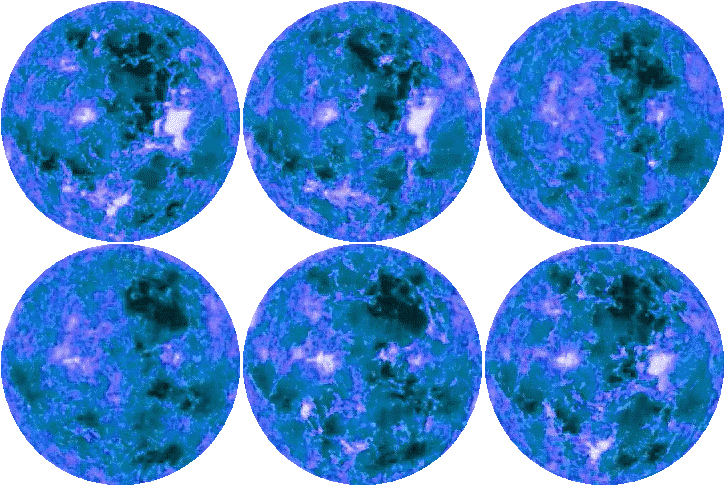
10,000 K - 29,999 K
17,540 F - 53,538 F
2.1-15 Solar Masses
1.8 - 6.5 Solar Diameter
Destined to be a Black Hole
A Class Star
7,500 K - 9,999 K
13,040 F - 17,538 F
1.4-2.1 Solar Masses
1.4 - 1.7 Solar Diameter
Destined to be a Neutron Star
F Class Star
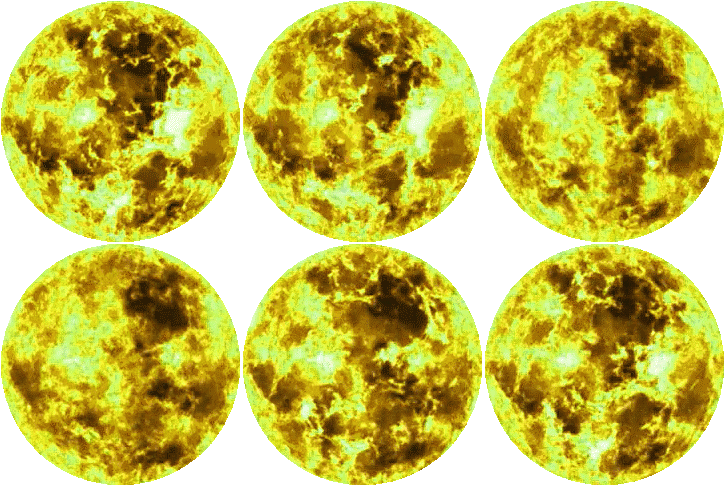
6,000 K - 7,499 K
10,340 F - 13,038 F
1.04-1.3 Solar Masses
1.15 - 1.3 Solar Diameter
Destined to be a White Dwarf
G Class Star (Our Sun)

5,200 K - 5,999 K
8,900 F - 10,338 F
0.80-1.03 Solar Masses
0.96 - 1.14 Solar Diameter
Destined to be a White Dwarf
K Class Star
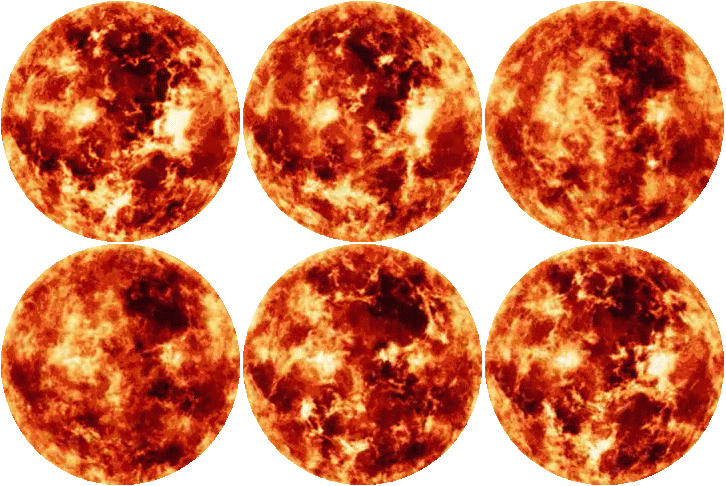
3,700 K - 5,199 K
6,200 F - 8,898 F
0.45-0.70 Solar Masses
0.70 - 0.95 Solar Diameter
Destined to be a White Dwarf
M Class Star
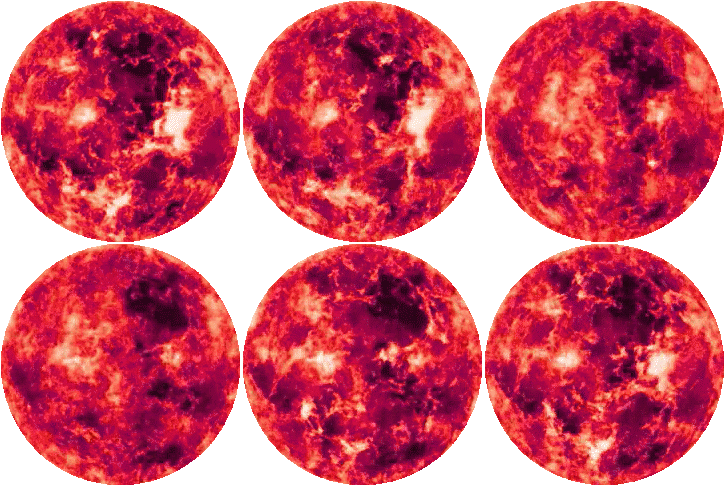
2,400 K - 3,699 K
3,860 F - 6,198 F
0.08-0.44 Solar Masses
0.69 or less Solar Diameter
Destined to be a White Dwarf
L Class Failed Star

1,300 K - 2,000 K
1,880 F - 3,140 F
51-80 Jupiter Masses
Diameter Similar to Jupiter
Destined to be a Black Dwarf
T Class Failed Star

700 K - 1,299 K
800 F - 1,878 F
26-50 Jupiter Masses
Diameter Similar to Jupiter
Destined to be a Black Dwarf
Y Class Failed Star

440 K - 699 K
332 F - 798 F
14-25 Jupiter Masses
Diameter Similar to Jupiter
Destined to be a White Dwarf
Sub-BD Failed Star

225 K - 439 K
-54 F - 330 F
3-13 Jupiter Masses
Diameter Similar to Jupiter
Destined to be a Black Dwarf
White Dwarf

4,000 K - 150,000 K
6,740 F - 269,540 F
0.17-1.33 Solar Masses
Diameter Similar to Earth
Destined to be a Black Dwarf
Neutron Star
600,000 K - 1 Million K
1.079 Million F - 1.799 Million F
1.1-3.3 Solar Masses
12.4 Mile Diameter
Destined to be a Neutron Star
Black Hole

0 K - 2.7 K
-459 F - 454 F
3.8 to 40 Billion Solar Masses
15-146 Billion Mile Diameter
Destined to be a Black Hole

Join the Exo Solaria Union
Help aid in UAP research, Stay informed on the UAP phenomenon, and to help push the United States government for full disclosure regarding UAP and alien species.