
Element 115 & Propulsion Claims

What Is Element 115? Understanding Moscovium and the Origins of the UFO Propulsion Story
Few topics in modern UFO discourse spark as much fascination as Element 115. Frequently cited in alien propulsion claims, reverse engineering narratives, and black budget conspiracy theories, Element 115 has become a cornerstone of internet discussions about anti-gravity technology and alien spacecraft.
But what is Element 115 in scientific terms, and how did it become linked to UFO propulsion systems?
Element 115 is the periodic table placeholder name for the synthetic super heavy element officially known as Moscovium. In 2016, the element was formally recognized and named after the Moscow region where key research took place. Moscovium was synthesized through nuclear reactions by scientists working at the Joint Institute for Nuclear Research in collaboration with the Lawrence Livermore National Laboratory.
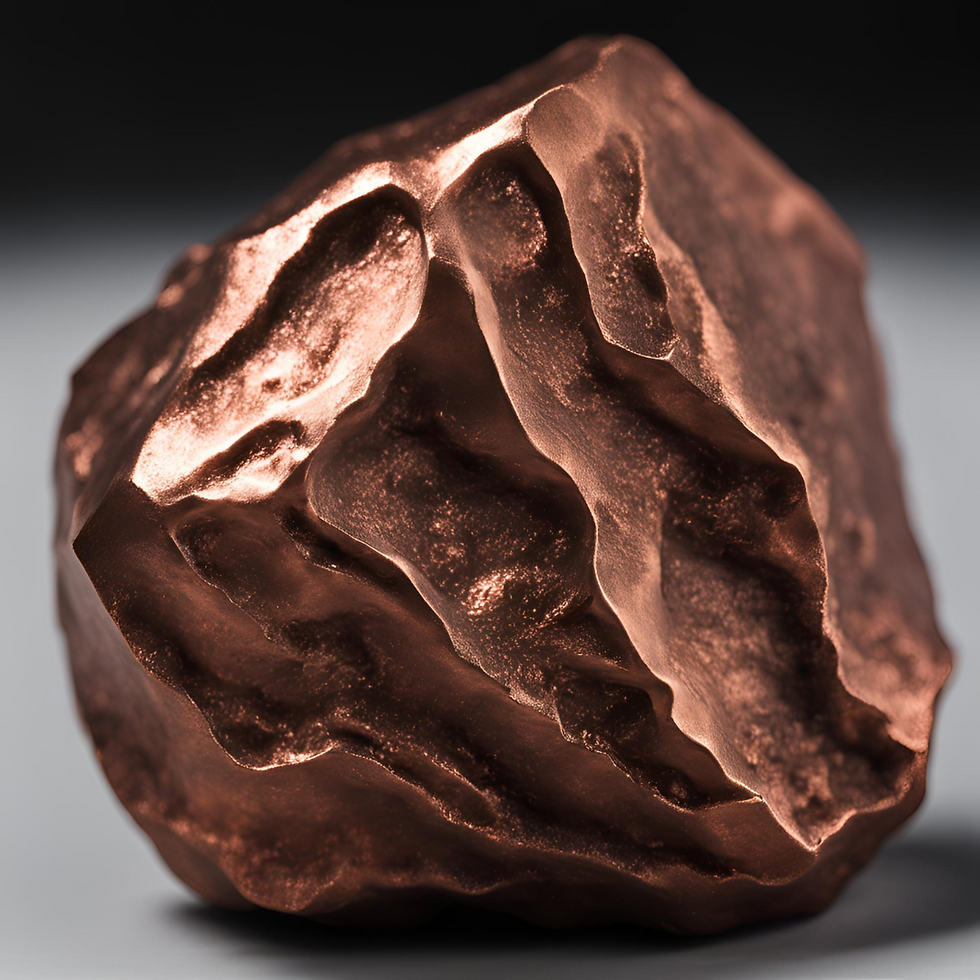
In laboratory conditions, Moscovium is extremely unstable. The isotopes created so far decay in fractions of a second through alpha decay chains, transforming into lighter elements almost immediately. This scientific reality stands in sharp contrast to popular UFO claims that describe a stable isotope of Element 115 capable of powering advanced gravity manipulating craft.
To understand the propulsion claims, we must separate two threads: the peer reviewed nuclear physics surrounding Moscovium, and the narrative that links Element 115 to alien spacecraft.
The Bob Lazar Story: How Element 115 Entered UFO Lore
The association between Element 115 and UFO propulsion systems largely traces back to the claims of Bob Lazar. In 1989, Lazar stated in television interviews that he had worked at a secret facility called S-4 near Area 51. According to his account, he was tasked with helping reverse engineer alien craft allegedly recovered by the United States government.
Lazar claimed these craft were powered by a stable isotope of Element 115. He described a system in which Element 115, when bombarded with protons, would produce antimatter and generate a powerful gravitational field. This field, he said, allowed the craft to distort spacetime, effectively bending space in front of the vehicle to enable faster than light travel.
At the time of Lazar’s claims, Element 115 had not yet been synthesized. Supporters argue this lends credibility to his story, which is a weak argument. Skeptics counter that the periodic table already predicted undiscovered elements beyond uranium, and referencing a theoretical heavy element was not extraordinary.
The debate continues to this day, making Element 115 one of the most searched terms in UFO propulsion discussions.
The Science of Moscovium: What We Actually Know
To evaluate propulsion claims, it is critical to understand what nuclear physicists have demonstrated in laboratories.
Synthetic Superheavy Elements and Nuclear Instability
Moscovium sits in the super heavy region of the periodic table, beyond naturally occurring elements. These elements are created by accelerating lighter nuclei into heavier target atoms. The resulting element exists for milliseconds or less before decaying.
Current isotopes of Moscovium, such as Mc-288 and Mc-289, decay rapidly. Their half lives are measured in fractions of a second. There is no experimental evidence of a stable isotope of Element 115.
However, theoretical nuclear physics does predict an “island of stability,” a region in which certain super heavy isotopes may have longer half lives due to closed nuclear shells. This concept has fueled speculation that a stable isotope of Element 115 might exist under conditions not yet achieved in Earth laboratories.
But speculation is not confirmation. As of today, no stable isotope of Moscovium has been observed or documented in peer reviewed literature.
Can Element 115 Produce Antimatter?
Lazar’s propulsion explanation involves Element 115 producing antimatter when bombarded with protons. In mainstream physics, antimatter production requires high energy particle interactions, typically inside particle accelerators.
There is no known nuclear reaction pathway in Moscovium that produces usable quantities of antimatter under controlled conditions. Antimatter production is extraordinarily energy intensive, and containment poses massive engineering challenges.
Thus, while antimatter propulsion is a legitimate theoretical concept explored by physicists, there is no evidence that Element 115 uniquely enables practical antimatter generation.
Anti-Gravity and Spacetime Manipulation: Is It Even Possible?
UFO propulsion claims often involve gravity manipulation, spacetime curvature, and warp drive technology. These ideas are not purely science fiction; they emerge from Einstein’s general theory of relativity.
General Relativity and Spacetime Curvature
According to Einstein’s equations, massive objects curve spacetime. In theory, if a sufficiently powerful gravitational field could be generated artificially, it might be possible to manipulate spacetime itself.
The hypothetical Alcubierre warp drive proposes compressing spacetime in front of a spacecraft and expanding it behind, allowing effective faster than light travel without locally exceeding light speed. However, this model requires exotic matter with negative energy density, something not yet demonstrated to exist in usable quantities.
Proponents of the Element 115 propulsion theory suggest that a stable isotope might interact with gravity at a fundamental level. However, gravity is the weakest of the four fundamental forces, and there is no known mechanism by which nuclear reactions in Moscovium would amplify gravitational effects.
Without experimental validation, these ideas remain speculative.
Reverse Engineering Alien Technology: Plausible or Fantasy?
One of the strongest drivers of interest in Element 115 propulsion claims is the broader narrative of recovered alien craft and government secrecy. This narrative often references classified programs, black budgets, and underground facilities.
In recent years, increased government transparency around unidentified aerial phenomena has reignited interest in advanced propulsion. The United States Department of Defense has released multiple reports acknowledging unexplained sightings, and agencies have studied anomalous craft behavior.
However, no official document confirms the possession of alien vehicles powered by exotic elements.
It is important to distinguish between acknowledged unidentified aerial phenomena and confirmed alien technology. Conflating the two creates confusion and weakens serious inquiry into anomalous aerospace phenomena.
Why Element 115 Became the Centerpiece of UFO Propulsion Theories
Element 115 occupies a unique psychological and narrative space in UFO culture for several reasons.
First, it sounds mysterious and scientific. The term “Element 115” evokes cutting edge nuclear physics and secret knowledge.
Second, it existed as a theoretical placeholder at the time of Lazar’s claims, making it seem prophetic when Moscovium was eventually synthesized.
Third, super heavy elements are inherently exotic and unstable, which lends them an aura of power and danger.
Search engine data shows sustained interest in phrases like “Element 115 UFO engine,” “Element 115 anti-gravity,” and “stable isotope of Element 115.” This ongoing curiosity reveals that the public is not merely seeking entertainment. Many are genuinely trying to reconcile modern physics with extraordinary claims.
Could There Be a Stable Isotope We Haven’t Found?
The concept of the island of stability is one of the most misunderstood aspects of this discussion.
Nuclear physicists theorize that certain super heavy isotopes may have longer half lives due to closed proton and neutron shells. However, even “stable” in this context could mean minutes or days, not millions of years.
There is currently no evidence that a long lived or naturally occurring isotope of Moscovium exists on Earth. Producing heavier isotopes requires extreme conditions not present in nature under normal circumstances.
If a stable isotope of Element 115 did exist, discovering it would revolutionize nuclear physics. But extraordinary claims require extraordinary evidence.
Evaluating Evidence: Scientific Standards vs. Anecdotal Claims
When analyzing propulsion claims, it is essential to apply consistent standards of evidence.
Scientific validation requires reproducibility, peer review, measurable data, and transparent methodology. Anecdotal testimony, even from confident insiders, does not meet that threshold.
That does not automatically mean all whistleblower accounts are false. History contains examples of classified projects later proven real. However, the burden of proof increases dramatically when claims involve violations of established physical laws.
Until physical samples of stable Element 115 are presented and independently analyzed, the propulsion story remains unverified.
The Future of Advanced Propulsion Research
While Element 115 propulsion remains unproven, advanced propulsion research is very real.
Government agencies, aerospace companies, and independent researchers are exploring nuclear thermal propulsion, nuclear electric propulsion, ion drives, and fusion concepts. These technologies aim to expand humanity’s reach deeper into space.
If breakthroughs occur in exotic physics, such as harnessing quantum vacuum energy or discovering new gravitational interactions, they will emerge through experimental evidence, not rumor.
The path to interstellar travel likely involves incremental scientific progress rather than secret alien alloys hidden in underground hangars.
Why Element 115 Still Matters in UFO Research
Even if the propulsion claims are unverified, Element 115 remains significant in UFO discourse for cultural and investigative reasons.
It represents a bridge between hard science and speculative possibility. It forces researchers and UFO enthusiasts alike to confront fundamental questions about evidence, secrecy, and the limits of physics.
It also highlights a broader issue in UFO research: the tension between scientific rigor and the allure of transformative revelation. Serious inquiry demands skepticism without cynicism, curiosity without gullibility.
By examining Element 115 through both scientific and investigative lenses, we move closer to clarity.
Final Analysis: Separating Science from Speculation
Element 115, known scientifically as Moscovium, is a real synthetic super heavy element with extremely short lived isotopes. No stable isotope has been confirmed. No verified experiment demonstrates gravity amplification or antimatter production unique to this element.
The propulsion claims associated with Element 115 originate primarily from the testimony of Bob Lazar and have not been independently substantiated. While the physics of spacetime manipulation and exotic matter are legitimate areas of theoretical study, they remain far beyond practical engineering.
For those seeking answers about UFO propulsion systems, the most important takeaway is this: curiosity must be paired with critical thinking. Claims about anti-gravity drives and spacetime engines deserve investigation, but they also demand evidence.
At the Exo Solaria Union, our mission is to analyze extraordinary claims with intellectual honesty, scientific literacy, and open minded skepticism. The truth about advanced propulsion, if it exists, will ultimately rest on data, not mythology.
The Element 115 story reminds us that the boundary between science and speculation is where the most important questions live.


Comments