
The Roswell Incident: Fact vs Fiction

What Happened in Roswell in 1947? A Complete Overview of the Roswell UFO Crash
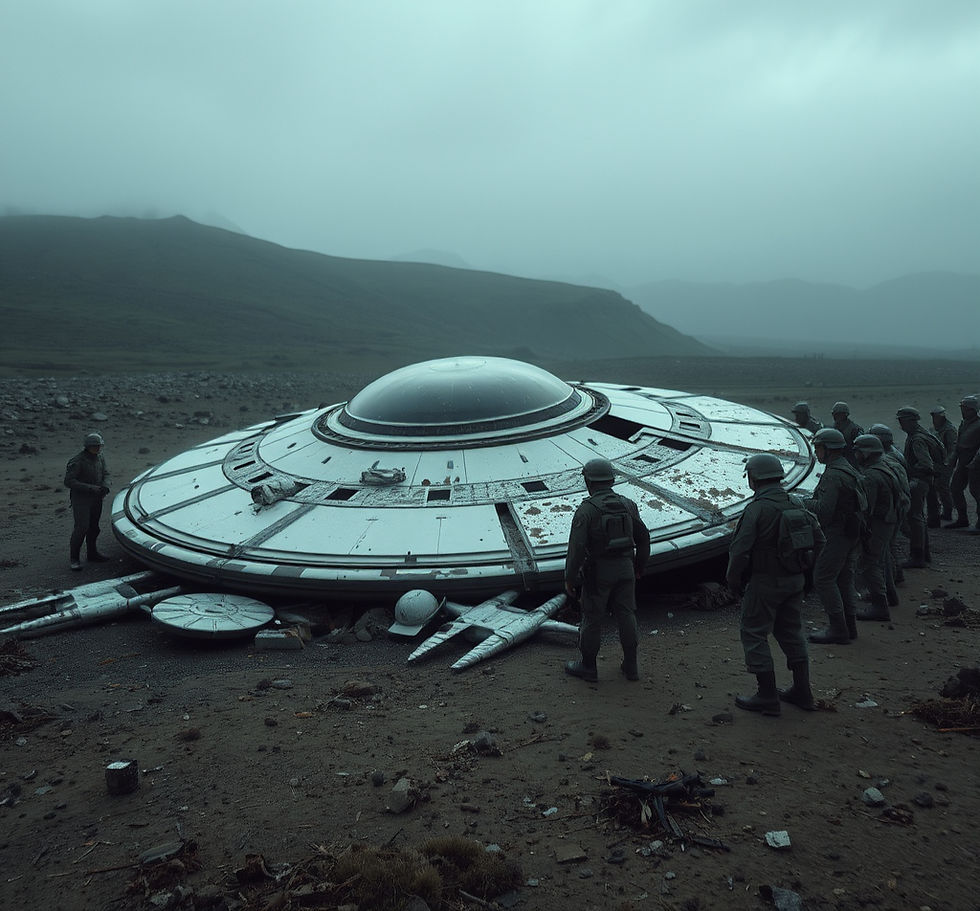
In the summer of 1947, a small desert town in southeastern New Mexico became the epicenter of what would become the most famous UFO case in history. The Roswell Incident, often described as the “Roswell UFO crash,” began with reports of strange debris discovered on a ranch northwest of Roswell.
Within days, headlines proclaimed that the United States military had recovered a “flying disc.” Shortly afterward, officials reversed their statement, insisting the debris was merely a weather balloon.

Nearly eight decades later, the Roswell Incident remains one of the most searched and debated UFO events in the world. From claims of alien bodies to allegations of a massive government cover up, Roswell sits at the crossroads of documented military history and enduring alien legend. Understanding what actually happened requires separating documented records from later testimony, cultural mythmaking, and speculative interpretation.
This article examines the Roswell Incident in detail, analyzing the timeline, official explanations, eyewitness claims, and the role of media and government secrecy in shaping the narrative. By exploring both sides of the debate, we aim to provide a balanced, research driven perspective that helps to clarify fact versus fiction surrounding Roswell.
The Historical Context: UFO Sightings and the Summer of 1947
The Roswell Incident did not occur in isolation. In June 1947, pilot Kenneth Arnold reported seeing nine crescent shaped UFO objects flying at high speed near Mount Rainier in Washington State. His description of their motion gave rise to the phrase “flying saucers,” a term that quickly spread through national headlines. Within weeks, UFO sightings were reported across the United States.
By early July 1947, the American public was primed for extraordinary aerial phenomena. The Cold War was intensifying, and anxiety about secret military technology, both domestic and foreign, was rising. Against this backdrop, debris found on a ranch near Roswell would ignite international speculation about aliens.
Mac Brazel and the Discovery of Strange Debris Near Roswell
The story begins with rancher William Brazel, often referred to as Mac Brazel. In early July 1947, Brazel discovered unusual debris scattered across his property near Corona, New Mexico. The material reportedly included metallic foil-like strips, rubber fragments, and lightweight beams marked with strange symbols.
Brazel brought some of the debris to local authorities, and the matter was quickly referred to the nearby Roswell Army Air Field, home to the 509th Bomb Group, the only atomic capable unit in the world at the time.
On July 8, 1947, the public information office at Roswell Army Air Field issued a press release stating that personnel had recovered a “flying disc.” The story was picked up by newspapers nationwide, including the Roswell Daily Record, which ran the now famous headline announcing the capture of a flying saucer.
Within hours, however, the narrative changed dramatically.
The Weather Balloon Explanation: Official Military Response
The following day, Brigadier General Roger Ramey of the Eighth Air Force in Fort Worth, Texas, displayed debris to reporters and identified it as the remains of a weather balloon. Photographs published in newspapers showed Ramey and his staff posing with rubber and foil material, reinforcing the official explanation.
For decades, this weather balloon explanation stood as the government’s official position. According to military authorities, the debris recovered near Roswell was consistent with high altitude weather balloon equipment used for atmospheric data collection.
Yet many researchers questioned the rapid reversal.
Why would trained military personnel initially identify balloon debris as a flying disc?
Why issue a press release declaring the capture of a flying saucer only to retract it hours later?
These questions fueled suspicion that something more significant had occurred.
Project Mogul: The Declassified Cold War Program
In the 1990s, the United States Air Force revisited the Roswell Incident and released detailed reports claiming the debris was not from a standard weather balloon, but from a classified surveillance project known as Project Mogul.
Project Mogul was a top secret initiative designed to detect Soviet nuclear tests using high altitude balloon arrays equipped with acoustic sensors. Because the project was classified in 1947, officials allegedly substituted the simpler “weather balloon” explanation to avoid revealing sensitive technology.
According to Air Force reports, the unusual materials described by witnesses, foil-like reflectors, lightweight beams, and rubber components, were consistent with Mogul balloon trains and radar targets. The strange “symbols” described on debris may have been decorative tape patterns used by a toy manufacturer that supplied some materials.
For skeptics, however, the Mogul explanation arrived decades after the event and appeared to be a retroactive attempt to close the case. The delay in disclosure contributed to ongoing mistrust.
Alien Bodies and Crash Retrieval Claims: When Fiction Entered the Narrative
While the original 1947 reports focused on debris, stories of alien bodies did not gain widespread attention until the late 1970s and 1980s. In 1978, nuclear physicist and UFO researcher Stanton Friedman interviewed former intelligence officer Jesse Marcel, who had handled some of the debris in 1947.
Marcel claimed that the material he saw was not consistent with a conventional balloon and described it as extraordinarily lightweight and durable. His testimony reignited interest in Roswell and introduced the idea that the government had recovered alien craft and possibly alien bodies.
Subsequent books and documentaries expanded these claims, alleging that small humanoid alien beings were recovered from a crash site and transported to secret facilities for study. Some accounts suggested autopsies were performed and that evidence was hidden within highly classified programs.
However, no verifiable physical evidence of alien bodies has ever been publicly presented. Many alien body related stories emerged decades after the event, raising questions about memory reliability and narrative evolution over time.
Area 51 and the Expansion of the Roswell Mythos
As Roswell stories gained momentum, attention shifted to secretive military installations, particularly Area 51. Though Area 51 was not publicly acknowledged until decades later, it became central to conspiracy narratives linking Roswell debris and alleged alien bodies to hidden research facilities.
In popular culture, Area 51 became synonymous with reverse engineering alien spacecraft and storing extraterrestrial remains. Books, films, and television programs reinforced this connection, even though no direct, documented link between Roswell and Area 51 has ever been confirmed in declassified government records.
The association reflects how the Roswell Incident evolved from a localized military event into a broader symbol of alleged government secrecy regarding UFOs and alien life.
Media, Pop Culture, and the Roswell Phenomenon
The Roswell Incident became a cultural phenomenon in part because of its timing and mystery. The 1990s saw a surge of UFO interest fueled by television shows like The X-Files, which dramatized government cover ups and alien conspiracies. Roswell became shorthand for hidden truth.
The town of Roswell embraced its identity as the UFO capital of the world, developing museums, festivals, and tourism centered on the 1947 crash narrative. Pop culture amplified the story, blending documented UFO events with fictional embellishments.
As a result, many public perceptions of Roswell derive more from media portrayals than from original military documents.
Analyzing Eyewitness Testimony: Memory, Time, and Credibility
One of the most complex aspects of the Roswell Incident is the evaluation of eyewitness testimony. Human memory is not static; it evolves over time and can be influenced by media exposure, suggestion, and cultural context.
Some key Roswell witnesses revised or expanded their accounts decades after the event. While this does not automatically invalidate their claims, it complicates efforts to reconstruct events precisely. Researchers must balance respect for testimony with critical examination of inconsistencies and temporal gaps.
In historical investigations, contemporary documentation often carries more weight than retrospective accounts. In Roswell’s case, official reports from 1947 consistently describe balloon-like materials, whereas alien related narratives largely emerged much later.
Government Secrecy and Public Distrust
Roswell’s enduring power stems partly from broader concerns about government transparency. During the Cold War, secrecy surrounding military technology was extensive. Programs like Project Mogul were classified, and misleading public explanations were sometimes used to protect national security.
This pattern of secrecy created fertile ground for suspicion. If the government misled the public about one aspect of an incident, skeptics argue, what else might have been concealed?
At the same time, secrecy alone does not confirm alien involvement. It may reflect strategic military priorities rather than hidden alien encounters.
Fact vs Fiction: What the Evidence Actually Supports
When evaluating the Roswell Incident, several facts are well documented:
Debris was recovered from a ranch near Roswell in July 1947.
The Roswell Army Air Field issued a press release referencing a “flying disc.”
The statement was quickly retracted, and officials identified the debris as balloon material.
Decades later, the United States Air Force linked the debris to Project Mogul.
Claims of alien bodies, crash retrieval programs, and reverse engineering alien craft lack publicly verifiable physical evidence. These narratives rely heavily on later testimony and secondary accounts.
This does not mean all questions are resolved. Some aspects of the Roswell incident remain ambiguous due to limited surviving documentation. However, the strongest documentary evidence supports the explanation that the debris originated from classified balloon based surveillance technology rather than alien spacecraft.
Why the Roswell Incident Still Matters Today
Despite extensive analysis, the Roswell Incident remains relevant in discussions about UFO disclosure and unidentified aerial phenomena. In recent years, renewed government acknowledgment of UAP investigations has sparked fresh interest in historical cases.
Roswell serves as a UFO case study in how information evolves over time. It demonstrates how media amplification, secrecy, and cultural storytelling can transform a single event into a global legend.
For researchers and enthusiasts alike, Roswell represents the intersection of aerospace history, Cold War secrecy, and humanity’s enduring fascination with the possibility of alien life.
Conclusion: The Legacy of the Roswell UFO Crash
The Roswell Incident endures because it sits on the boundary between documented history and imaginative speculation. The original event involved real debris, real military personnel, and real press coverage. Over time, layers of interpretation transformed it into a cornerstone of UFO mythology.
When examining Roswell through the lens of evidence, the balance of documented material supports the Project Mogul explanation. Yet the cultural impact of the incident extends far beyond its likely origins. Roswell became a symbol of hidden truth, government secrecy, and the tantalizing possibility that we are not alone.
Separating fact from fiction does not diminish the significance of the Roswell Incident. Instead, it clarifies its place in history and strengthens the credibility of serious UFO research. By grounding analysis in documented evidence while acknowledging unanswered questions, we move closer to understanding not only what happened in 1947, but why it continues to captivate the world.


Comments